Japan has one of the best public transportation networks in the world, but it can feel confusing on a first visit. There are dozens of railway companies, several kinds of tickets, rail passes, and IC cards — and they don’t all work together the way you might expect.
The good news: most first-time visitors only need a simple setup. Inside cities, you’ll mostly ride trains and subways. Between cities, you’ll usually take the Shinkansen (bullet train) or a limited express train. Buses, domestic flights, and taxis fill the gaps — for budget trips, remote islands, rural areas, or late-night rides.
This guide gives you the big picture so you can decide what to book and what to read next. If you’ve never used a Japanese train before, keep our step-by-step guide to using trains in Japan open as well.
Fares, timetables, and ticket rules change. Selected fares, ticket conditions and operator information were reviewed against official sources on October 14, 2026. Journey times shown are approximate, not live schedules; confirm current departures and prices with the operator before traveling.
Quick Answer: How to Get Around Japan
- Getting around Tokyo: JR lines and the subway (Tokyo Metro and Toei) cover almost everything. Pay with an IC card such as Suica or PASMO.
- Getting around Osaka and Kyoto: In Osaka, trains and the subway work best. In Kyoto, combine trains, subway, and city buses — buses reach many temples but can be very crowded.
- Traveling between major cities: The Shinkansen is the standard choice. Highway buses are cheaper but slower; flights make sense for long distances such as Tokyo to Hokkaido, Okinawa, or Kyushu.
- Traveling from the airport: Airport express trains, regular trains, limousine buses, and taxis are all options. The best one depends on your hotel location, luggage, and arrival time.
- Visiting rural areas: Trains and buses can be infrequent. Check the last departure, and consider a regional rail pass or a rental car.
Japan Transportation at a Glance
Here is how the main options compare for a typical first trip.
| Transport | Best for | Main advantage | Watch out for |
|---|---|---|---|
| Local trains & subways | Getting around Tokyo, Osaka, Kyoto, and other cities | Frequent, punctual, easy to pay with an IC card | Rush-hour crowds; different companies operate different lines |
| Shinkansen | Long trips between major cities | Fast, comfortable, city center to city center | Most expensive rail option; extra rules for large luggage |
| Limited express trains | Routes without a Shinkansen (e.g., to resort or regional areas) | Faster than local trains, often with reserved seats | Usually need a limited express ticket on top of the fare |
| Highway buses | Budget travel and overnight trips | Often much cheaper than the Shinkansen | Slower; traffic delays; booking usually required |
| Domestic flights | Very long distances and islands | Saves time for Hokkaido, Kyushu, or Okinawa | Airport transfers and check-in add time; baggage limits |
| Taxis | Short trips, heavy luggage, late nights | Door-to-door, no transfers | Expensive over long distances; not every taxi accepts cards |
← Swipe to see the full table →
Understanding Japan’s Train System
Trains are the backbone of travel in Japan. The most confusing part for visitors is that the network is run by many different companies.
JR, private railways, and subways
- JR (Japan Railways): A group of six companies that run the nationwide network, including all Shinkansen lines and many city lines such as Tokyo’s Yamanote Line.
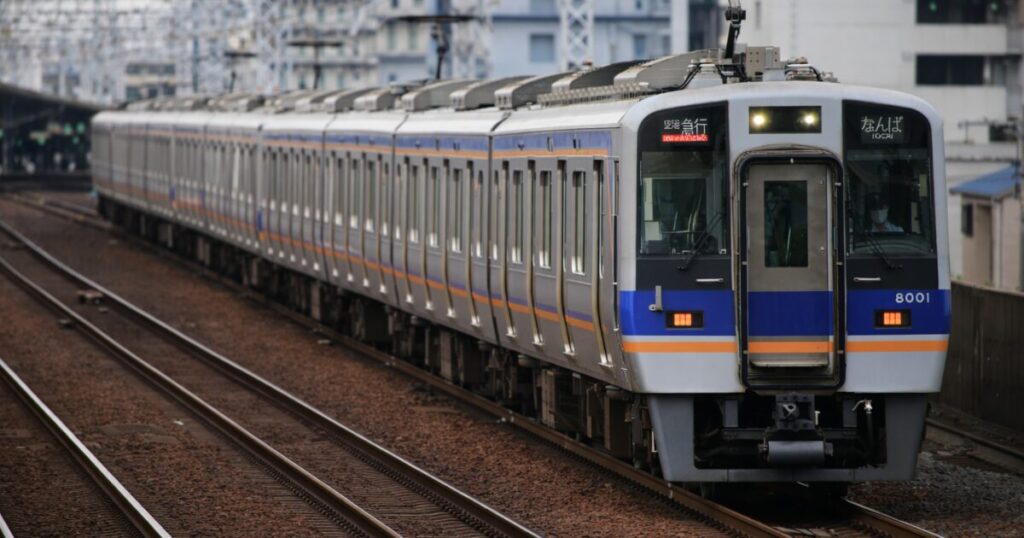
- Private railways: Companies such as Keisei, Keikyu, Odakyu, Hankyu, and Nankai. They run important routes, including several airport lines.
- Subways: City-run or city-linked networks. Tokyo has two subway operators, Tokyo Metro and Toei Subway.
Why it matters: when you switch between companies, you may pass through another ticket gate and pay a separate fare. The nationwide Japan Rail Pass generally does not cover subways or private railways; separate fares may be needed. Regional-pass coverage varies by product, so always check the official route map.
Train types: local, rapid, express, and Shinkansen
- Local: Stops at every station.
- Rapid / Express: Skips some stations. On most lines, no extra ticket is needed.
- Limited Express: Faster, with fewer stops. Usually requires a limited express ticket in addition to the fare.
- Shinkansen: High-speed lines between major cities. Requires a fare plus a Shinkansen ticket.
Names and rules vary by company, so always check the train type on the departure board before boarding. For gates, transfers, and platform tips, see How to Use Trains in Japan.
IC Cards, Tickets and Rail Passes
You don’t need to master Japan’s fare system. You only need to know which type of ticket fits each trip.
IC cards (Suica, PASMO, ICOCA)
Rechargeable IC cards are the easiest way to pay for local trains, subways, and many buses. You tap in and out, and the fare is deducted automatically. Major IC cards from different regions can be used in each other’s areas, so a Suica from Tokyo also works on trains in Osaka.
However, an IC card does not mean you can ride everything for just the basic fare:
- Limited express trains, reserved seats, and Green Cars (first class) usually need an additional ticket.
- A single trip generally can’t start in one IC card area and end in another — for example, from the Tokyo area to the Osaka area on one tap.
- On designated JR East Shinkansen sections, some non-reserved seats can be used through the Touch de Go! service. Most regular IC cards need a one-time setup; Welcome Suica Mobile does not. The service is limited to eligible sections, and the fare is deducted from your card balance. For the Tokaido and Sanyo Shinkansen (Tokyo–Kyoto–Osaka–Hiroshima), buy the appropriate Shinkansen ticket or use a supported ticket-linked IC booking, such as smartEX. Simply tapping an ordinary IC card without a booking is not enough.
- Some rural lines and buses still don’t accept IC cards.
For buying, charging, and using a card (including on iPhone), read How to Use Suica & PASMO in Japan.
Single tickets
Paper tickets from station machines cover the basic fare for one trip. They’re useful if you don’t have an IC card, or for routes where IC cards aren’t accepted.
Reserved-seat, limited express, and Shinkansen tickets
For limited express trains and the Shinkansen, you normally pay two parts: the base fare and a limited express or Shinkansen ticket. A reserved seat guarantees you a place; non-reserved cars are first-come, first-served. Ticket machines and online booking services usually combine both parts into one purchase.
Ready to reserve your train? Our step-by-step guide to booking Shinkansen tickets online explains which official booking site to use, how to book Tokyo to Kyoto on smartEX, and how to board with a QR ticket, an IC card or a paper ticket.
Japan Rail Pass and regional passes
The nationwide Japan Rail Pass gives unlimited travel on most JR trains for 7, 14, or 21 days. Regional passes sold by individual JR companies cover a smaller area (such as Kansai or eastern Japan) and can be better value if you stay in one region. The nationwide pass generally excludes private railways and subways. Some regional passes cover selected partner lines, so check each pass’s official coverage map before buying.
Is the Japan Rail Pass Worth It?
Not for everyone. Since a major price increase in October 2023, the pass is worth it for fewer travelers than before. As of October 14, 2026, the official site lists the 7-day Ordinary Car pass at ¥50,000 when bought online.
Points to consider before buying:
- Visiting only Tokyo, or only Tokyo plus one round trip, often costs less with individual tickets.
- A pass usually only pays off with several long Shinkansen trips within its validity period.
- To ride the fastest Nozomi and Mizuho trains, pass holders need an extra special ticket. JR Central lists it at ¥4,960 between Tokyo and Shin-Osaka (as of October 14, 2026).
- A regional pass may fit your route better than the nationwide pass.
To compare your own itinerary against pass prices, see Japan Rail Pass: Is It Worth It?
Getting from Japan’s Major Airports
Most first trips start at one of three airports. The best route depends on where your hotel is, how much luggage you have, and what time you land. Late arrivals may miss the last train, so check before you fly.
Narita International Airport → Tokyo
Narita is far from central Tokyo. The main options are the Keisei Skyliner (Keisei quotes a fastest time of 36 minutes from Narita Airport Terminal 2–3 Station to Nippori Station (not Tokyo Station or your hotel)), the JR Narita Express, cheaper Keisei trains, and airport buses. Which is best depends mostly on whether your hotel is on the east side (Ueno, Asakusa), around Tokyo Station, or in the west (Shinjuku, Shibuya).
Compare routes: Narita Airport to Tokyo
Haneda Airport → Tokyo
Haneda is much closer to the city center. The Keikyu Line, the Tokyo Monorail, airport buses, and taxis all work well. Taxis are a realistic option here, especially for groups or late arrivals.
Compare routes: Haneda Airport to Tokyo
Kansai International Airport → Osaka
Kansai Airport sits on an island in Osaka Bay. The Nankai Line is convenient for Namba, the JR lines (including the Haruka limited express) suit Tennoji, Shin-Osaka, and Kyoto, and limousine buses serve many hotels.
Compare routes: Kansai Airport to Osaka
How to Travel Between Major Japanese Cities
For most first-time visitors, the Shinkansen is the simplest way to travel between cities. Typical routes:
- Tokyo → Kyoto: Tokaido Shinkansen, typically around two to two and a half hours by Nozomi, depending on the service.
- Tokyo → Osaka: Tokaido Shinkansen to Shin-Osaka. Fast Nozomi services take roughly two and a half hours; exact times depend on the service and departure station.
- Osaka → Kyoto: No Shinkansen needed. A JR Special Rapid takes roughly half an hour between Osaka and Kyoto stations; Hankyu or Keihan may be more convenient for other neighborhoods. Check the current timetable.
- Tokyo → Hiroshima: Tokaido and Sanyo Shinkansen, roughly four hours on a direct Nozomi; the exact time varies by train. Flying can also be worth comparing.
How to choose
- Time matters most: Shinkansen, or a flight for very long distances.
- Budget matters most: Highway buses, or slower trains on short routes.
- Lots of luggage: Reserve a Shinkansen seat with an oversized baggage area (see below), or send bags ahead with a luggage delivery service.
- Traveling at peak times: Reserve early around New Year, Golden Week (late April to early May), and Obon (mid-August). During set peak periods, all Nozomi seats are reserved-only.
How to Navigate Japanese Train Stations
Large stations like Shinjuku, Tokyo, or Osaka can be overwhelming, but signs are usually in English, and the same few habits will get you through.
- Finding the correct line: Follow the line name and color, and the station number (for example, a letter-and-number code on subway lines).
- Checking the platform: Confirm the platform number, the direction (final destination), and the train type on the departure board.
- Using ticket gates: Tap your IC card or insert your ticket. Shinkansen areas often have a second set of gates inside the station.
- Transferring between lines: Transfers between companies can involve a long walk and another gate. Allow extra time in big stations.
- Following English signs: Yellow signs typically show exits; line signs show transfers.
- Missed train or wrong exit: Don’t panic — trains in cities run frequently. Ask staff at the gate; station attendants can help adjust fares if you went too far.
A navigation app with live route search makes all of this much easier. For detailed walk-throughs, see How to Use Trains in Japan.
Common Transportation Mistakes to Avoid
- Buying a JR Pass without checking your route. Compare it with individual tickets first.
- Assuming an IC card works on every Shinkansen. Many routes need a separate Shinkansen ticket or online booking.
- Boarding a limited express with only an IC card. You’ll usually need a limited express ticket too, and may have to pay on board or at the exit.
- Not checking the last train from the airport. If you land late, plan a bus, taxi, or airport hotel in advance.
- Ignoring luggage rules. On the Tokaido, Sanyo, and Kyushu Shinkansen, suitcases with combined dimensions (length + width + height) over 160 cm and up to 250 cm generally require an advance reservation for an oversized-baggage seat or area. Bringing one without the required reservation can incur a ¥1,000 fee. Certain items, including strollers and sports equipment, have exceptions; check the operator rules. Baggage over 250 cm in total dimensions is generally not permitted.
- Leaving too little transfer time. Big stations can take 10 minutes or more to cross.
- Getting on the wrong train type. Express and rapid trains skip stations, so you could pass your stop.
Suggested Transportation Setup for First-Time Visitors
- Plan your route from the airport to your hotel before you fly, including a backup if you land late.
- Get an IC card (a physical card or one on your phone) for local trains, subways, and buses.
- If you’re visiting several cities, check Shinkansen and limited express options for each trip.
- Decide on a JR Pass only after comparing it with the tickets your itinerary needs.
- Make sure you have mobile data for route searches and maps — see our guide to internet in Japan.
Frequently Asked Questions
What is the easiest way to get around Japan for first-time visitors?
Use trains and subways with an IC card inside cities, and the Shinkansen between major cities. This covers most popular itineraries, such as Tokyo, Kyoto, and Osaka.
Is it hard to use trains in Japan if I don’t speak Japanese?
Not usually. Major stations have English signs and announcements, and ticket machines offer English menus. A route-search app helps you find the right line and platform.
Can I use Suica or PASMO everywhere in Japan?
Major IC cards work on trains, subways, and many buses in large cities across Japan. But they don’t cover limited express or reserved-seat charges, can’t be used for one trip across separate IC card areas, and some rural lines don’t accept them.
Do I need to book the Shinkansen in advance?
Outside peak periods, you can often buy tickets on the day. Booking ahead is wise during holidays, if you want seats together, or if you’re traveling with large luggage that needs an oversized baggage seat.
Should I buy a Japan Rail Pass for Tokyo, Kyoto, and Osaka?
It depends on your exact itinerary. For a simple Tokyo–Kyoto–Osaka trip, individual tickets are often cheaper, but compare prices for your own route before deciding.
Are taxis expensive in Japan?
Taxi fares vary by city, distance, traffic and time of day. Sharing a short ride may be practical for a group, but long rides can be expensive. Some taxis may not accept your preferred card or payment method, so check before riding and carry a backup payment option.
Is it better to take the train or the bus between cities?
Trains are faster and more reliable. Highway buses are usually cheaper and useful for overnight travel, but they take longer and can be delayed by traffic.
Explore Our Japan Transportation Guides
- How to Use Trains in JapanTicket gates, transfers, train types, and buying tickets.
- How to Use Suica & PASMO in JapanGetting an IC card, charging it, and where it works.
- Japan Rail Pass: Is It Worth It?Prices, coverage, and how to decide for your itinerary.
- Narita Airport to TokyoSkyliner, Narita Express, buses, and taxis compared.
- Haneda Airport to TokyoKeikyu, Tokyo Monorail, buses, and taxis compared.
- Kansai Airport to OsakaNankai, JR Haruka, buses, and taxis compared.
Sources (checked October 14, 2026)
- JAPAN RAIL PASS official site – Prices
- JR Central – NOZOMI MIZUHO Ticket for Japan Rail Pass holders
- JR Central – Oversized baggage on the Shinkansen
- JR Central – Reserved-only Nozomi during peak periods
- JR East – Welcome Suica Mobile and Touch de Go! Shinkansen
- JR East – Touch de Go! Shinkansen (regular IC cards)
- JR West – Regional rail pass coverage example
- Keisei Electric Railway – Skyliner
- JNTO – Getting around Japan